10th Vision Maker Film Festival | Native American Film Series
Now in it’s third year, the Native American Film Series at The Ross features free monthly screenings showcasing Native American films and television programs from the Vision Maker Media public broadcasting archives. Presented by The Ross Media Arts Center, Vision Maker Media, and Friends of The Ross.
Unless otherwise noted, screenings in this series will take place on the second Monday of each month and are admission free and open to the public. Tickets available at the Ross box office (online ticketing not available for free screenings).
ABOUT VISION MAKER MEDIA
What began as a film archive to conserve and document Native American stories, transformed into the nation’s leader in content by and about Indigenous people for public broadcasting. Vision Maker Media works with Native producers to develop, produce, and distribute programs to educate audiences. More info…
OYATE WOYAKA (2024)
MONDAY, FEBRUARY 9 ~ 7:15 p.m.
Followed by a Zoom Q&A with Bryant High Horse and George McAuliffe
Moderated by Kevin Abourezk
OYATE WOYAKA tells the story of the Lakota language history, loss and revitalization. The film touches on the deep history and spirituality of the language, the shocking history that caused Lakota to be on the verge of extinction and the modern efforts being made to bring language back to life and the immense challenges this effort faces.
BRYANT HIGH HORSE JR (Producer/Director) “Oyate Tawanawuchapi tejupi” or “Defends People,” belongs to the Pute Oyate of the Lakota. High Horse Jr. identifies himself as a veteran and defender of American and Indian rights. He is also a relative of Crazy Horse. High Horse believes that racism comes from a lack of understanding about other cultures, stating, “If you do understand each other’s cultures, you can have a beautiful journey together.” Urban travel and military service have provided him with a sense of the importance of journeys. Following his travels, he returned to South Dakota and began working in K-12 and higher education. High Horse has been described as a teacher, guidance counselor, KILI radio host, veteran and Lakota culture bearer. He has received a Master’s degree and previously taught at Black Hills State University and in Rapid City, SD, for nineteen years. High Horse Jr. is currently an adjunct professor at Oglala Lakota College and he has no plans to retire from teaching.
GEORGE MCAULIFFE (Producer/Director) has a 20 year career writing, directing and performing in critically acclaimed and award winning plays, films and television shows in Chicago and Los Angeles featured in The Sundance and South By Southwest Film Festivals. George is currently developing television shows with emmy winning documentary and television director, Judd Apatow in Los Angeles. Oyate Woyaka is a family project he is supporting by combining his expertise, empathy and craft to amplify the voices of his Lakota family members.
KEVIN ABOUREZK (Moderator) is an award-winning Native American journalist and Deputy Managing Editor of ICTNews.org, which features Native American news, information and entertainment. In his nearly 25 years of journalism experience, he has traveled the country to write about Native American people and stories, including investigative reports, and he has been an editor and reporter at the Lincoln Journal Star. Through his work he has received the Native American Journalists Association’s prestigious Richard LaCourse Award for Investigative Reporting, the 2006 Casey Medal for Meritorious Journalism from the Casey Journalism Center on Children and Families, and many awards from the Associated Press. He received a Master’s degree in Journalism and Mass Communications from the University of Nebraska-Lincoln and a Bachelor of Arts degree in English from the University of South Dakota.
COMING ROUND (2026)
MONDAY, MARCH 9 (Time TBA)
The spectacular Sonoma pacific coast and the mighty redwood forests are iconic elements of California’s and American identity. And forever intertwined with these inspiring landscapes is the cultural richness of the Native American tribes that have lived for thousands of years along the coastal bluffs and forested waterways. In December 2016, 700 acres of land was returned to the Kashia Pomo Indians from which they had been separated nearly 200 years before.
SCHA’NEXW ELHTAL’NEXW SALMON PEOPLE: PRESERVING A WAY OF LIFE
MONDAY, APRIL 13 (Time TBA)
Scha’nexw Elhtal’nexw Salmon People: Preserving a Way of Life is an hour-long documentary inspired by the late Chexanexwh Larry Kinley, a Lummi fisherman and tribal leader who embodied a belief in tribal sovereignty. The film follows two Lummi families fishing for sockeye. As they come to grips with a depleting fishery, Larry asks: “Who Are We Without Salmon?” Celebrating the resilience and adaptive natures of salmon and the people, the film is a reflection on a spiritual life way centered on respect and gratitude for salmon.
MAY TITLE TBA
MONDAY, MAY 11 (Time TBA)
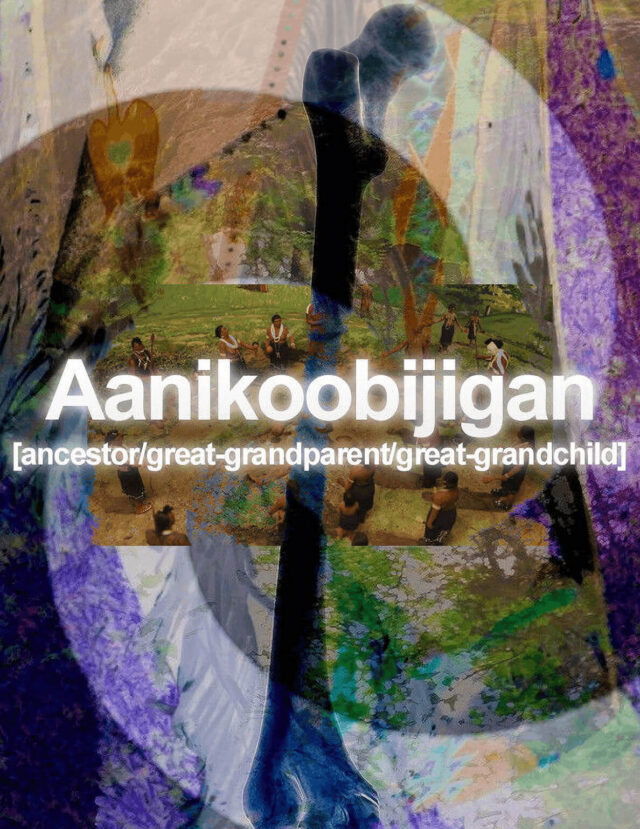
AANIKOOBIJIGAN [ANCESTOR / GREAT-GRANDPARENT / GREAT-GRANDCHILD]
MONDAY, JUNE 8 (Time TBA)
In the sterile archives of museums our ancestor’s remains struggle to find their way home. The film follows the eleven indigenous repatriation specialists that make up MACPRA (Michigan Anishinaabek Cultural Preservation & Repatriation Alliance). Through an essayistic approach the film takes a critical look at the reasoning that justified unearthing and collecting them in the first place, and presents vérité portraits of the courageous individuals doing the hard and emotionally draining work of fighting for their return.
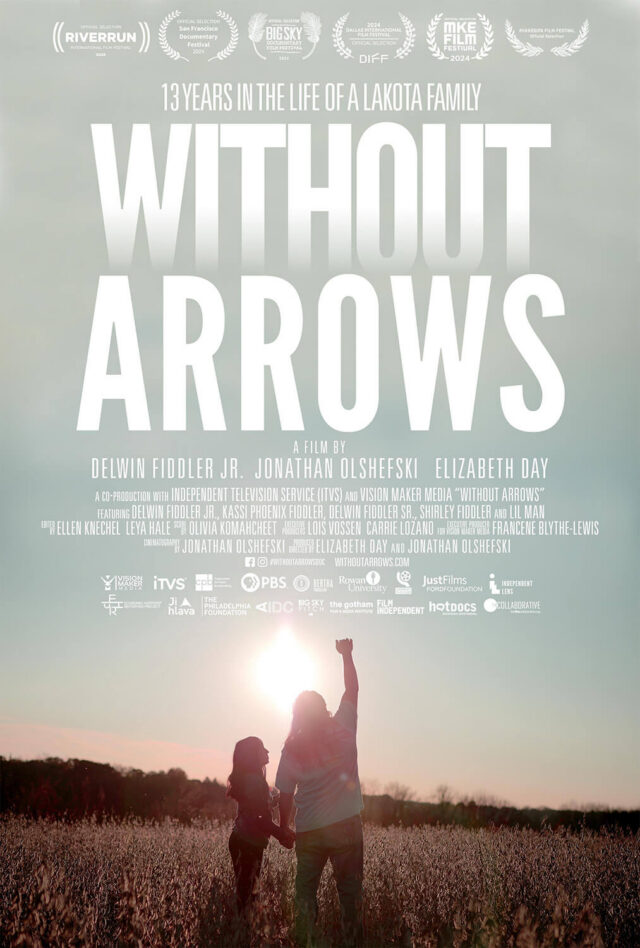
WITHOUT ARROWS
MONDAY, JULY 13 (Time TBA)
Without Arrows is a longitudinal portrait of a Lakota family living on a reservation in South Dakota, that unfolds over the course of 12 years. Delwin Fiddler Jr. is a champion grass dancer who grew up on the Cheyenne River Sioux Tribe Reservation in South Dakota, but left as a young man to escape a trauma that splintered his family and built a new life in Philadelphia. Thirteen years later, Delwin returns home to attempt to heal the past.
THE LAND RETURNS
MONDAY, AUGUST 10 (Time TBA)
The Land Returns chronicles a surprising new way that Indigenous nations are regaining their land: individual settlers, local governments, environmental organizations, and even corporations are returning stolen land to Indian nations as part of a growing grassroots movement of restitution and reconciliation. Walter Echo-Hawk asserts, “If a person is wanting to heal a historical injury or to bring about a reconciliation or a true atonement of a painful past . . . there’s nothing better that one can do than to return the land.”
UNCOVERING BOARDING SCHOOLS: STORIES OF RESISTANCE AND RESILIENCE
MONDAY, SEPTEMBER 14 (Time TBA)
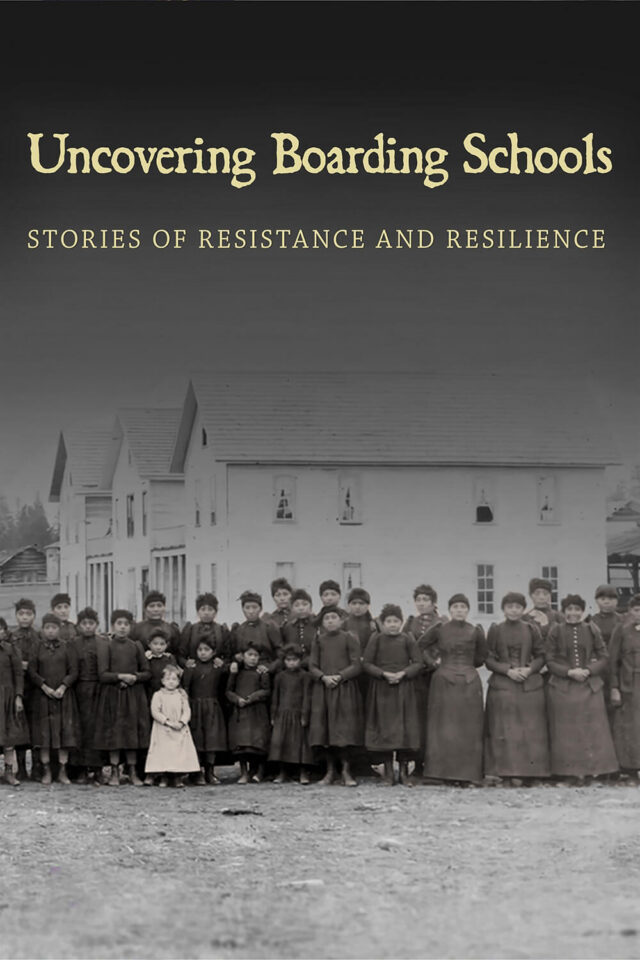
Uncovering Boarding Schools: Stories of Resistance and Resilience chronicles present-day efforts by Klamath tribal members to uncover the difficult and often hidden history of Indigenous children forced into government-sanctioned boarding schools—including some religious schools that were previously unknown–in order to bring about community reconciliation and healing.
OCTOBER TITLE TBA
MONDAY, OCTOBER 12 (Time TBA)
ONE WITH THE WHALE
MONDAY, NOVEMBER 9 (Time TBA)
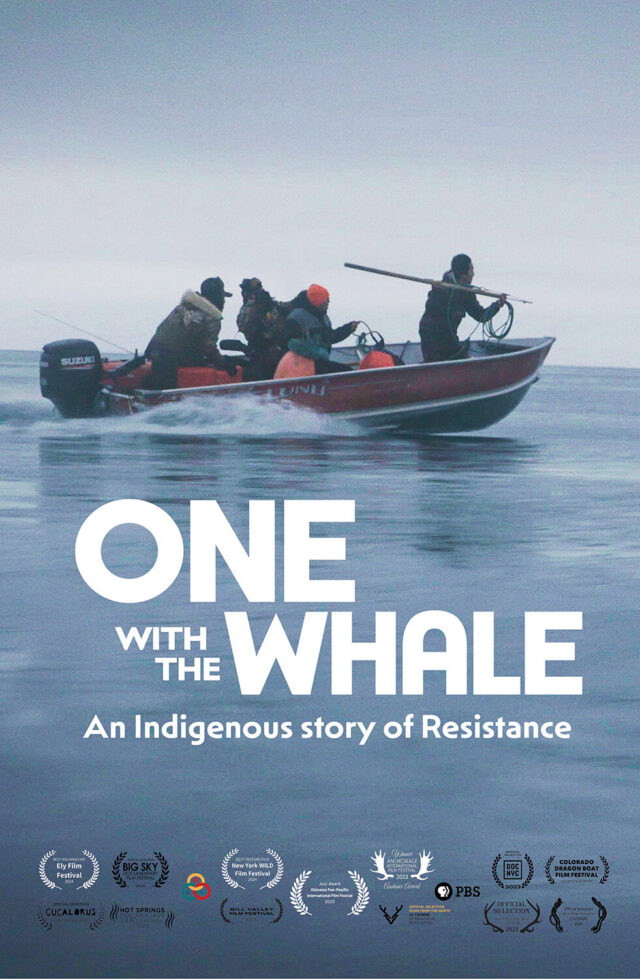
In St. Lawrence, Alaska, a remote island in the Bering Sea where hunting whales is a matter of life and death, a shy Native teen, Chris Apassingok, became the youngest person ever to harpoon a whale for his village. His family gets blindsided by thousands of keyboard activists brutally attacking him online—without fully understanding the importance of the hunt to his community’s survival. “One with the Whale” chronicles the obstacles Chris and his family face, amidst larger currents of food security, environmental racism, climate change, cultural genocide, and social media. The livelihood of the Apassingoks and their village are threatened as they search for a balance between modernity and a traditional subsistence lifestyle.
WHOSE LAND? O’ODHAM LAND!
MONDAY, DECEMBER 14 (Time TBA)
Whose Land? O’odham Land! documents the breathtaking landscapes and profound cultural legacy of the O’odham people living in Southern Arizona and Northern Sonora, whose voices are so often excluded from mainstream discussions about the US – Mexico borderlands. Through intimate storytelling, the film explores the impact of the U.S.-Mexico border on O’odham ancestral land, traditions, and identity—while celebrating the resilience of those fighting to maintain their heritage.
Programs in this series have been collected from public broadcasts spanning from the 1970s to today and may contain a low-resolution picture and occasional image anomalies from their transfer to digital media.